 Tel : +86 595 87817505
 Mobile Phone : +86 13799577570
 Email : robin@hiway-bags.com





Gym bags and duffel bags are often used for sports, fitness, travel, and everyday activities. Although they may look similar, they are designed with different priorities in mind. Gym bags typically focus on organizing workout essentials, while duffel bags are often designed to provide flexible storage for clothing, equipment, and larger personal items.
For brands, retailers, and wholesale buyers, understanding the differences between gym bags and duffel bags is important when selecting materials, planning product specifications, and developing a suitable bag collection. The choice of fabric, compartment layout, carrying system, and manufacturing details can all influence the final product.
This guide compares gym bags vs. duffel bags from a materials, design, and manufacturing perspective, helping buyers understand which style is more suitable for their target market and product requirements.
What Is the Difference Between Gym Bags and Duffel Bags?
The main difference between gym bags and duffel bags is their intended use and functional design. A gym bag is generally developed around fitness-related storage, while a duffel bag offers a more flexible carrying solution for sports equipment, travel belongings, and everyday gear.
However, these categories are not completely separate. Many modern sports duffel bags are also suitable for gym use, and some gym bags adopt the traditional duffel shape with additional compartments for shoes and accessories.
Gym Bags: Designed for Fitness and Daily Training
Gym bags are developed to carry items people regularly need for workouts, including sportswear, shoes, towels, water bottles, toiletries, and personal accessories.
Common design features include:
- A separate shoe compartment to keep footwear away from clean clothing.
- Multiple pockets for keys, phones, wallets, and small accessories.
- Lightweight construction for convenient daily transportation.
- Adjustable shoulder straps and reinforced handles for comfortable carrying.
- Water-resistant materials or reinforced bottom panels for practical gym use.
For fitness brands and promotional product buyers, gym bags can also be customized with brand logos, colors, printed patterns, and different pocket configurations.
Explore custom gym bags and fitness bags to see different styles and product configurations.
Duffel Bags: Designed for Flexible Storage and Carrying
Duffel bags are generally characterized by their spacious main compartments and elongated or cylindrical shapes. They are widely used for weekend trips, sports activities, outdoor adventures, and carrying bulky equipment.
Typical design features include:
- A large main compartment for clothing, equipment, and travel essentials.
- Wide openings that make packing and retrieving items easier.
- Top handles and detachable or adjustable shoulder straps.
- Optional side pockets, front pockets, and internal storage sections.
- Foldable or convertible structures for convenient transportation and storage.
Unlike gym bags, duffel bags are not necessarily designed around fitness-specific organization. Their storage capacity and adaptable construction make them suitable for a wider range of applications.
For buyers looking for versatile travel and sports products, custom duffel bags offer a variety of shapes, capacities, and material options.
Gym Bags vs. Duffel Bags: Material Differences
Material selection plays an important role in the performance, appearance, and production cost of both gym bags and duffel bags. The most suitable fabric depends on the intended application, expected load, water resistance requirements, and target retail positioning.
Polyester: A Common Choice for Gym Bags
Polyester is widely used in gym bag manufacturing because it offers a practical balance of weight, durability, and cost. It is available in different fabric densities and surface finishes, allowing manufacturers to develop products for different price ranges.
For example, 600D polyester is commonly selected for sports and travel bags where a stronger fabric construction is desirable. It can also be combined with mesh panels, lining materials, and reinforced bottom sections.
For gym bag designs, polyester provides several advantages:
- Relatively lightweight and suitable for frequent daily use.
- Available in a wide range of colors and printed patterns.
- Suitable for logo printing and different branding applications.
- Can be combined with different lining and reinforcement materials.
When developing a custom fitness collection, buyers can consider fabric density, coating, lining, and color consistency to achieve the required product specifications.
Nylon: Lightweight and Suitable for Versatile Sports Bags
Nylon is another popular material for sports and travel bags. Compared with many standard polyester fabrics, nylon can offer a favorable strength-to-weight ratio, making it suitable for products where lightweight construction and abrasion resistance are important.
Depending on the fabric construction and finishing process, nylon bags can provide:
- Lightweight construction for easy carrying.
- Good abrasion resistance in suitable fabric specifications.
- Flexible structures for foldable and compact bag designs.
- Compatibility with different coatings and water-resistant finishes.
For brands developing lightweight fitness accessories or compact travel products, nylon is worth considering as an alternative to polyester.
Tarpaulin and PVC: Suitable for More Demanding Applications
Tarpaulin and PVC-based materials are often selected for duffel bags that require a more structured appearance or improved resistance to moisture and outdoor conditions.
These materials are particularly useful for travel bags, sports equipment bags, and products designed to carry items in environments where exposure to water or dirt is a concern.
For example, Allbagslife offers a tarpaulin travel duffel bag made with tarpaulin and 600D PVC. Its convertible carrying design allows it to be used as either a handbag or backpack.
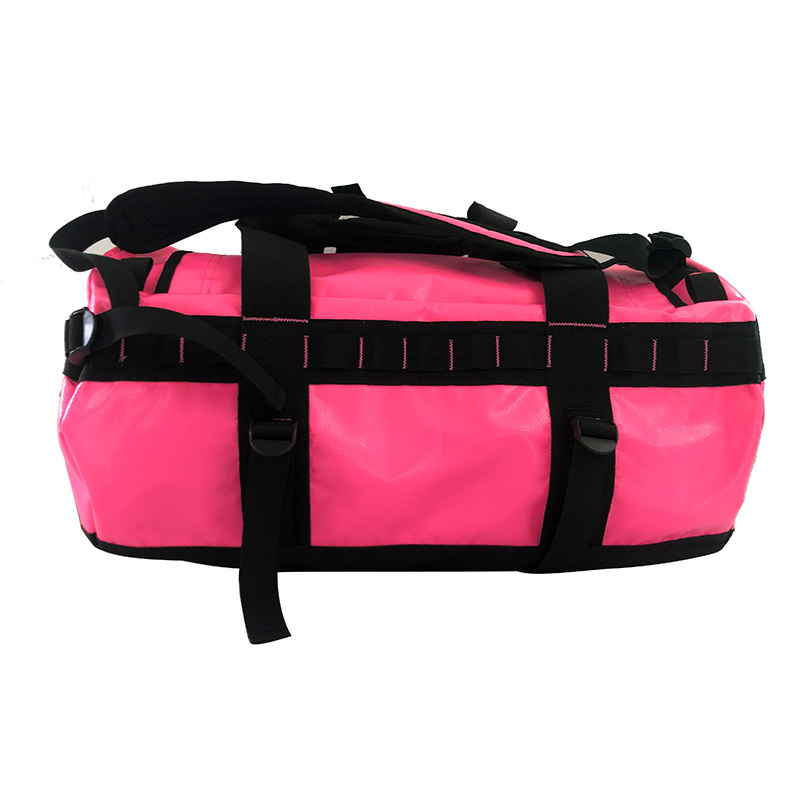
When choosing tarpaulin or PVC materials, buyers should consider fabric thickness, flexibility, surface finish, seam construction, and the actual waterproof performance required by the product.
Design Differences: Compartments, Shape and Carrying Options
Beyond fabric selection, the internal structure and carrying system are important factors that distinguish gym bags from duffel bags. These design details affect usability and should be considered early in the product development process.
Compartment Layout and Storage Organization
Gym bags usually require more specialized storage arrangements. A separate shoe compartment, ventilated pocket, wet-item section, and small accessory pockets can make the bag more practical for fitness users.
Duffel bags generally prioritize a larger main compartment. Depending on the intended market, additional features may include:
- Side compartments for shoes or smaller equipment.
- Internal zippered pockets for personal belongings.
- Front pockets for quick-access items.
- Mesh pockets for organizing accessories.
- Expandable or foldable structures for flexible storage.
For manufacturers, compartment planning should take into account the dimensions of the items being carried, pocket accessibility, lining construction, and the available internal space.
Shape and Overall Construction
Gym bags are available in compact rectangular, cylindrical, and rounded designs. Their dimensions are usually determined by the amount of workout clothing, footwear, and personal items the user needs to carry.
Duffel bags often feature a longer body with a wide opening, allowing users to store larger items more conveniently. Some designs also incorporate reinforced bottom panels to help maintain the bag's shape when loaded.
For brands targeting different customer groups, selecting the right dimensions and structural details can be just as important as choosing the fabric itself.
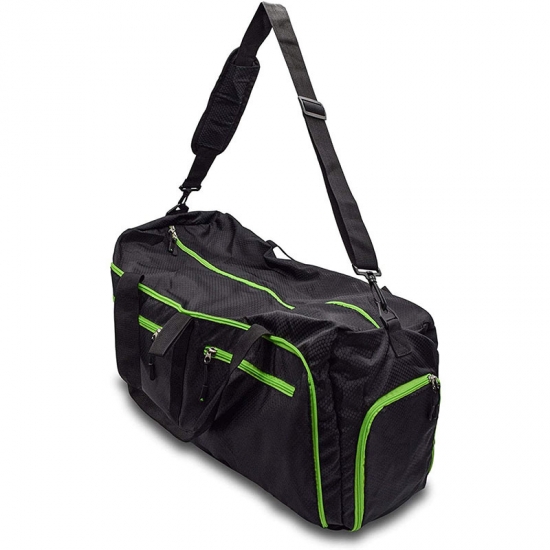
Handles, Shoulder Straps and Convertible Designs
Most gym bags feature two top handles and an adjustable shoulder strap. Some models also include padded shoulder sections to improve carrying comfort.
Duffel bags offer more flexibility in carrying configurations. Depending on the design, they may include:
- Dual top handles for hand carrying.
- Detachable shoulder straps for crossbody carrying.
- Convertible backpack straps for hands-free transportation.
- Reinforced attachment points for carrying heavier loads.
Convertible designs are particularly useful for travel and outdoor sports products because they allow users to switch between carrying methods depending on the situation.
Manufacturing Differences Between Gym Bags and Duffel Bags
From a manufacturing perspective, gym bags and duffel bags share many production processes, including material cutting, sewing, zipper installation, reinforcement, and quality inspection. However, their different structures and functional requirements can affect the production workflow.
Material Cutting and Preparation
The manufacturing process starts with material selection and cutting. Fabric panels, linings, reinforcement layers, and other components are prepared according to the approved product specifications.
Gym bags with multiple compartments may require more individual fabric panels, mesh sections, and pocket components. Duffel bags with larger main bodies may require wider fabric panels and careful material layout to reduce unnecessary waste.
For custom projects, buyers should confirm fabric specifications, color references, material thickness, and accessory requirements before bulk production begins.
Sewing, Reinforcement and Zipper Installation
Both gym bags and duffel bags require reliable stitching to maintain their structure during regular use. However, areas exposed to repeated pulling or heavier loads deserve particular attention.
Important manufacturing details include:
- Reinforced stitching at handle attachment points.
- Secure shoulder strap connections.
- Consistent zipper installation and smooth operation.
- Reinforced bottom panels and stress-bearing seams.
- Neat edge finishing and consistent seam allowances.
For gym bags, manufacturers also need to pay attention to the construction of shoe compartments and internal dividers. For larger duffel bags, handle strength and load-bearing areas are particularly important.
Quality Inspection and Functional Testing
Quality inspection should cover both the appearance and functionality of the finished bag. A product may look attractive but still fail to meet customer expectations if its zippers, straps, or stitching are not properly constructed.
Depending on the product specifications, inspection can include:
- Checking fabric consistency, color, and surface defects.
- Inspecting stitching quality and seam alignment.
- Testing zipper movement and closure performance.
- Checking handle and strap attachment points.
- Reviewing bag dimensions and compartment construction.
- Conducting appropriate load or functional tests according to product requirements.
For wholesale and private-label orders, confirming inspection requirements before production helps reduce inconsistencies between approved samples and bulk products.
Gym Bags vs. Duffel Bags: Which Is Better for Your Brand?
There is no universal answer because the right product depends on the target customer, sales channel, and intended application. Brands should evaluate the functional requirements of their customers before deciding which style to develop.
Gym bags are generally a better choice when:
- Your target customers regularly visit gyms or fitness centers.
- Separate shoe compartments and organized storage are important.
- You are developing fitness accessories or sports merchandise.
- You need compact products suitable for daily workouts.
Duffel bags are generally a better choice when:
- Your target customers need larger storage capacity.
- The products are designed for travel, outdoor activities, or sports equipment.
- Flexible carrying options are important.
- You want to offer versatile products for different occasions.
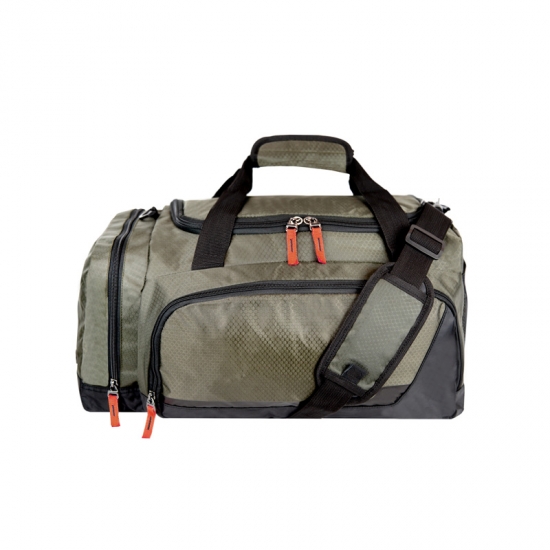
Some brands may also benefit from offering both styles. A compact gym bag can serve everyday fitness users, while a larger sports duffel bag can target customers who need more storage for travel and equipment.
What Should Buyers Look for in a Gym Bag or Duffel Bag Manufacturer?
Choosing the right manufacturing partner is important when developing a new bag collection or sourcing products for wholesale distribution. Buyers should look beyond the initial product price and consider the manufacturer's ability to meet design, material, and production requirements.
Material and Design Customization
A suitable manufacturer should be able to discuss different fabric options, lining materials, zipper specifications, colors, logo applications, and compartment configurations.
Buyers should also confirm whether the manufacturer can work from existing product samples, reference images, or technical drawings to develop products that match their brand requirements.
Sample Development and Production Communication
Before placing a bulk order, requesting a pre-production sample is a practical way to evaluate the actual product. It allows buyers to review dimensions, materials, stitching, logo placement, and functional details before confirming mass production.
Clear communication about sample approval, production lead times, packaging, and delivery arrangements can also help make the sourcing process more predictable.
Quality Control and Order Requirements
Different products may require different quality inspection standards. Buyers should discuss their expectations regarding material consistency, stitching strength, zipper performance, product dimensions, and packaging before confirming an order.
It is also important to clarify minimum order quantities, customization costs, sample charges, and production schedules to avoid misunderstandings during cooperation.
As a bag manufacturer in Quanzhou, China, Allbagslife provides different sports, gym, travel, and duffel bag options for international buyers. The company offers customized colors and logo options, with OEM and ODM services available for suitable projects.
Whether you are developing a fitness bag collection or sourcing large-capacity sports duffel bags, choosing a suitable product structure and material specification is an important starting point.
To discuss your product requirements, visit Allbagslife's contact page and share your design, material preferences, and estimated order quantity.
Frequently Asked Questions About Gym Bags and Duffel Bags
Are gym bags and duffel bags the same?
No. Gym bags are generally designed for fitness activities and often include shoe compartments, accessory pockets, and workout-specific storage. Duffel bags typically offer larger main compartments and more flexible storage for travel, sports equipment, and everyday use. However, some sports duffel bags can also function as gym bags.
What is the best material for manufacturing gym bags?
Polyester is a popular choice because it is lightweight, versatile, and available in different fabric densities. Nylon is another option for lightweight and abrasion-resistant designs. The best material depends on the intended use, budget, durability requirements, and desired appearance.
Are duffel bags suitable for gym use?
Yes. Duffel bags are suitable for gym use because they offer spacious storage for workout clothing, shoes, towels, and accessories. Models with separate shoe compartments and multiple pockets can provide additional organization for fitness users.
What is the difference between polyester and tarpaulin duffel bags?
Polyester duffel bags are generally lightweight and flexible, making them suitable for everyday sports and travel use. Tarpaulin bags typically offer a more structured and moisture-resistant construction, depending on the material specification and seam design. Buyers should select the material according to the product's intended application.
Can gym bags and duffel bags be customized for private-label brands?
Yes. Both types of bags can be customized with brand logos, colors, materials, dimensions, pocket layouts, and accessories. OEM and ODM projects may also involve adjustments to the overall structure and product design, depending on the manufacturer's capabilities.
What should I consider before ordering custom gym bags or duffel bags?
Buyers should confirm the intended application, bag dimensions, material specifications, storage compartments, logo requirements, order quantity, sample approval process, and production lead time. Providing reference images or technical drawings can also help manufacturers understand the project more accurately.

