 Tel : +86 595 87817505
 Mobile Phone : +86 13799577570
 Email : robin@hiway-bags.com





For brands targeting business travelers, commuters, students, and urban professionals, an anti-theft laptop backpack can offer more than a place to carry electronic devices. It combines laptop protection, organized storage, convenient access, and practical security features in one everyday product.
Developing a custom anti-theft laptop backpack requires more than adding a combination lock or hidden pocket to a standard backpack. Brands need to consider how users carry their devices, where personal belongings are stored, which security features are practical, and how the design can be manufactured consistently at scale.
For businesses planning to launch a private-label backpack collection, working with an experienced bag manufacturer helps turn product concepts into production-ready designs. Allbagslife provides bag design and manufacturing services, including OEM and ODM solutions for different market requirements.
Define Your Target Market and Product Positioning
Before selecting materials or designing compartments, brands should identify who will use the backpack and where it will be used. A backpack designed for daily commuting may require different security features from one intended for international business travel.
Understanding the target market also helps determine the product's appearance, capacity, price positioning, and feature priorities.
Business Travelers and Office Professionals
Business users typically need a clean, professional appearance with convenient storage for laptops, documents, chargers, and personal accessories. A dedicated laptop compartment, discreet rear pockets, lockable zipper options, and a luggage attachment strap can make the backpack more practical for daily commuting and business trips.
Students and Daily Commuters
Students and commuters often prioritize lightweight construction, multiple storage compartments, comfortable shoulder straps, and easy access to frequently used items. Hidden pockets and reinforced laptop compartments can add value without making the backpack unnecessarily complicated.
Frequent Travelers
For frequent travelers, security and organization are particularly important in crowded transportation environments. Designs can incorporate lockable closures, concealed storage, water-resistant fabrics, and practical access points to help users manage their belongings more conveniently.
Defining these customer groups first gives brands a clearer direction when developing custom business backpacks and helps avoid adding features that increase production costs without improving the user experience.
Select the Right Anti-Theft Features
Anti-theft protection is not a single feature. It is a combination of structural design, closure systems, storage placement, and material selection. The most suitable configuration depends on the intended application and product positioning.
When developing a custom anti-theft laptop backpack, brands should evaluate the following features:
Hidden Zippers and Concealed Pockets
Hidden zippers and rear-access pockets make frequently targeted storage areas less visible to people around the wearer. Placing these compartments against the user's back can make unauthorized access more difficult in crowded public spaces.
However, concealed storage should remain convenient for the wearer. Pocket placement, zipper direction, and opening dimensions all need to be considered during sample development.
Lockable Zippers and Combination Locks
Lockable zipper pulls and combination lock systems provide an additional layer of access control. They can be particularly useful for travel-oriented backpacks and designs that store valuable electronic devices.
Brands should evaluate the lock's durability, ease of operation, and compatibility with the zipper construction. A locking mechanism should secure the intended opening without making everyday access unnecessarily difficult.
Dedicated Padded Laptop Compartments
A secure laptop compartment should provide adequate cushioning and prevent the device from moving excessively inside the backpack. The compartment dimensions should be developed around the intended laptop sizes rather than relying on a general large-capacity design.
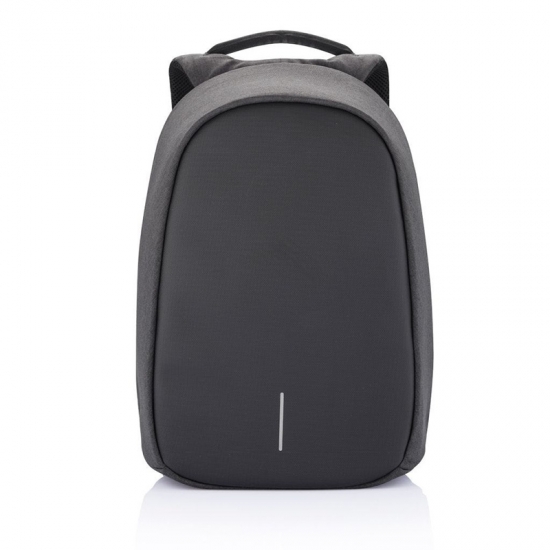
For example, Allbagslife's High Quality Hidden Pockets USB Charging Port Antitheft Backpack includes two padded compartments designed for a 15.6-inch laptop and a 12.9-inch tablet. This provides a practical reference for brands developing backpacks for users who carry multiple electronic devices.
USB Charging Access
An external USB charging port can improve convenience for commuters and business travelers. It allows users to connect a power bank stored inside the backpack to an external charging interface.
When specifying this feature, brands should consider cable routing, port placement, stitching reinforcement, and the space required for the power bank. The charging port itself does not provide power; users still need to supply a compatible power bank and charging cable.
Cut-Resistant Materials and Reinforced Construction
For premium anti-theft collections, brands may consider cut-resistant fabric panels, reinforced stitching, and stronger strap attachment points. These features can help improve resistance to certain physical attacks and everyday wear.
Material selection should be based on the required level of protection, flexibility, weight, appearance, and manufacturing feasibility. If a product is marketed as cut-resistant, the material and finished construction should be tested to support that claim.
Choose Suitable Fabrics and Backpack Materials
The outer fabric, lining, padding, and hardware all influence the performance and appearance of a custom anti-theft laptop backpack. Brands should select materials according to the intended market rather than focusing on fabric cost alone.
Common material options include:
- Polyester: A versatile option for everyday backpacks, offering different fabric weights, textures, and surface treatments.
- Nylon: Suitable for products requiring a lightweight construction and good abrasion resistance.
- Oxford Fabric: Commonly used for business and travel backpacks, with options for different densities and water-resistant coatings.
- Recycled PET Fabric: An option for brands looking to incorporate recycled materials into their product collections.
- PU-Coated Fabrics: Can provide additional water resistance and a different surface appearance, depending on the fabric construction.
For the interior, polyester lining, foam padding, and reinforced divider panels can help protect electronic devices and improve compartment organization.
Material decisions should also account for the selected zipper system, hardware, sewing process, and final product weight. A fabric that performs well in isolation may still require additional reinforcement when used around high-stress areas.
Develop a Functional Backpack Structure
A well-designed anti-theft laptop backpack needs to balance security, storage capacity, and carrying comfort. Adding too many compartments can increase complexity, while insufficient organization may reduce the product's practical value.
During product development, brands should pay particular attention to the following structural details.
Laptop Compartment Dimensions
Determine the target laptop size and allow sufficient space for protective padding and easy insertion. The compartment should hold the device securely without placing excessive pressure on its corners or screen.
Pocket Placement and Storage Organization
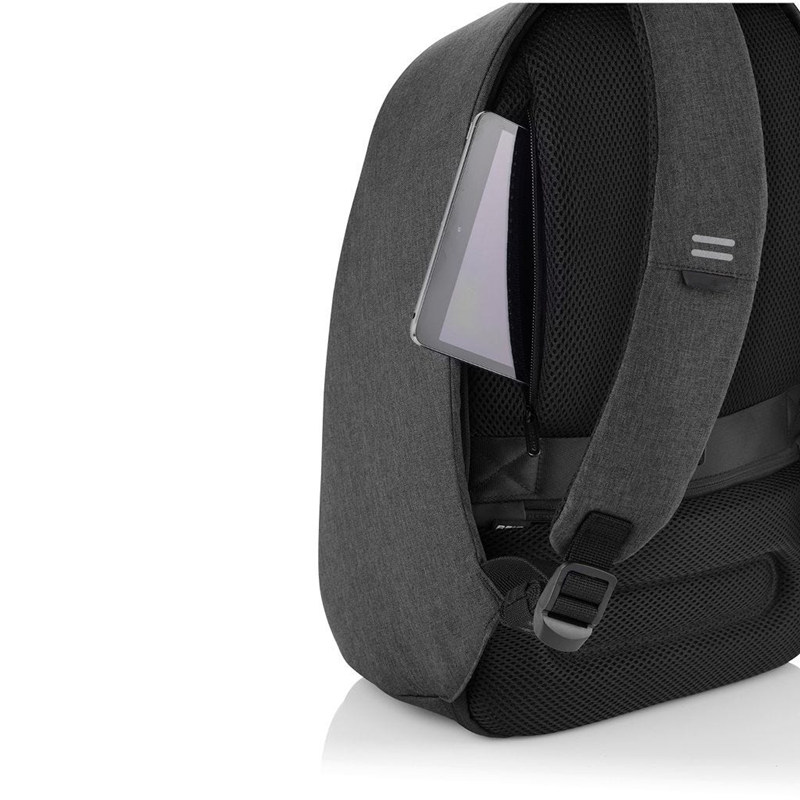
Separate everyday essentials from valuable electronic devices. Hidden rear pockets can be reserved for wallets and passports, while front and interior compartments can accommodate cables, notebooks, keys, and other accessories.
The following image shows a backpack design with a concealed rear storage area, providing a useful reference when planning pocket placement.
Shoulder Straps and Back Panel
Comfort is essential for backpacks intended for daily commuting and extended travel. Padded shoulder straps, breathable mesh, suitable back support, and balanced weight distribution can improve the carrying experience.
Strap attachment points should also be reinforced to withstand repeated loading and movement. These details are particularly important when the backpack is designed to carry laptops and other relatively heavy equipment.
Exterior Appearance and Branding
Anti-theft backpacks do not need to look overly technical. Minimalist silhouettes, subtle hardware, contrasting fabric panels, and carefully positioned branding can create a more recognizable product identity.
Brands can customize colors, logo applications, zipper pulls, labels, lining, and packaging to align the finished product with their existing collections.
How to Develop a Custom Anti-Theft Laptop Backpack with a Manufacturer
Once the product concept and functional requirements are clear, the next step is to translate the design into a manufacturable backpack. Working with a manufacturer during the early development stage helps identify structural problems before they affect bulk production.
A typical custom backpack development process includes the following stages.
Share Your Product Requirements
Start with a product brief covering the target market, intended users, laptop capacity, dimensions, materials, security features, color preferences, logo requirements, and estimated order quantity.
Reference images, sketches, existing samples, or technical drawings can help the manufacturer understand the desired construction more accurately.
Review Design and Material Options
The manufacturer can evaluate the proposed design and recommend suitable materials, zippers, hardware, padding, and construction methods. At this stage, brands should confirm which security features are essential and which can be adjusted to meet their target budget.
For example, a backpack intended for business commuters may prioritize hidden pockets and a padded laptop compartment, while a travel-focused design may require additional locking features and luggage attachment functionality.
Create and Review a Prototype
Sample development allows brands to evaluate the backpack's actual dimensions, compartment layout, material feel, zipper operation, and overall appearance.
Rather than approving a sample based only on its appearance, test it with the intended laptop and everyday accessories. Check whether the device fits comfortably, whether concealed pockets are easy to access, and whether the backpack remains balanced when fully loaded.
Conduct Functional and Quality Testing
Before approving bulk production, brands should establish a testing checklist covering the main functions and construction details.
- Check zipper opening, closing, and locking performance.
- Inspect stitching around shoulder straps and high-stress areas.
- Evaluate laptop compartment dimensions and padding.
- Test pocket accessibility and storage capacity.
- Check material consistency, color, and surface quality.
- Evaluate water resistance where the product specification requires it.
- Inspect logo placement, labels, and finishing details.
For products claiming cut resistance or a specific level of water protection, appropriate material or finished-product testing should be arranged. Brands should avoid making performance claims without supporting evidence.
Confirm Bulk Production Specifications
After sample approval, all important details should be documented in the final production specification. This includes measurements, material references, color standards, hardware, logo artwork, construction details, packaging, and inspection requirements.
Keeping an approved sample as a production reference helps reduce differences between the prototype and finished goods.
Customize Your Backpack for Brand Differentiation
For private-label brands, product differentiation is not limited to security features. The overall design should reflect the brand's positioning and appeal to its intended customers.
Several customization areas can help create a distinctive collection:
- Logo customization: Embroidery, screen printing, heat transfer, rubber labels, and metal logo plates.
- Color combinations: Custom fabric colors, contrasting panels, lining colors, and hardware finishes.
- Functional details: USB charging ports, trolley straps, concealed pockets, and adjustable compartments.
- Material selection: Polyester, nylon, Oxford fabric, recycled PET, and other suitable fabric options.
- Packaging: Custom hangtags, labels, polybags, and retail packaging.
Allbagslife's existing Business Anti-Theft Slim Durable Laptop Backpack is one example of a business-oriented design. It features a 15.6-inch laptop compartment, Oxford fabric with a water-resistant construction, and an external USB charging port.
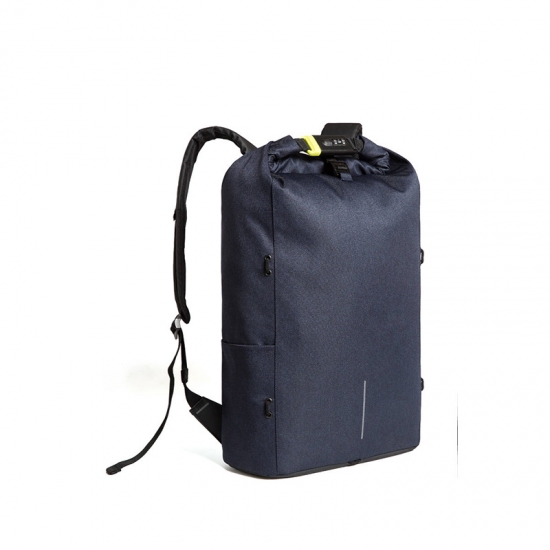
Brands looking for a more structured appearance can also explore the Large Capacity Traveling Durable Business Laptop Backpack as a reference for laptop storage, business use, and customized colors and logos.
What Should Brands Consider Before Mass Production?
Even after a sample is approved, several commercial and production factors should be reviewed before placing a bulk order.
Minimum Order Quantity and Production Cost
MOQ depends on the backpack design, material sourcing, hardware requirements, customization level, and production arrangements. Brands should request a quotation based on their actual specifications rather than comparing prices for products with different constructions.
Sample and Production Lead Time
Development time depends on design complexity and material availability. Allbagslife's existing product listings provide useful reference points: the hidden-pocket anti-theft backpack lists a sample time of 7–15 days and a production time of 45–60 days. Actual schedules for a new customized design should be confirmed with the manufacturer.
Quality Control and Consistency
Bulk production requires consistent materials, dimensions, stitching, hardware, and logo application. Brands should agree on inspection criteria and acceptable tolerances before manufacturing begins.
Clear communication between the buyer and manufacturer is especially important when a design includes multiple security components, concealed compartments, or customized hardware.
Work with Allbagslife on Your Custom Anti-Theft Backpack Project
Developing a successful anti-theft laptop backpack involves more than combining security accessories. The product needs to balance practical protection, carrying comfort, storage organization, appearance, and manufacturing feasibility.
Quanzhou Hairun Bags Co., Ltd. operates Allbagslife, providing bag design and manufacturing services for international buyers. Its product range includes business bags, laptop backpacks, anti-theft bags, travel bags, sports bags, and other customized bag solutions.
Whether you are developing a new private-label laptop backpack, upgrading an existing business bag collection, or sourcing an OEM/ODM backpack solution, sharing your design requirements early can help establish a more efficient development process.
Explore the Anti-Theft Bags collection for existing product references, or contact the Allbagslife team to discuss your custom backpack requirements.
Ready to develop your own anti-theft laptop backpack? Share your design concept, target specifications, and estimated order quantity with the Allbagslife team to discuss the next steps.
Contact Allbagslife for Custom Backpack Manufacturing
Frequently Asked Questions About Custom Anti-Theft Laptop Backpacks
What features should a custom anti-theft laptop backpack have?
A custom anti-theft laptop backpack can include hidden pockets, lockable zippers, concealed storage compartments, padded laptop sleeves, reinforced construction, and optional USB charging ports. The final feature combination should match the target users and product positioning.
Which materials are suitable for anti-theft laptop backpacks?
Polyester, nylon, Oxford fabric, and recycled PET are common options. The choice depends on weight, abrasion resistance, appearance, water resistance, cost, and the required construction. Additional cut-resistant materials can be considered for products requiring enhanced physical protection.
Can manufacturers customize laptop backpack sizes and compartments?
Yes. OEM and ODM backpack projects can involve customized dimensions, laptop compartment sizes, hidden pockets, internal dividers, zipper configurations, materials, colors, and branding, subject to design and production feasibility.
How long does it take to develop a custom anti-theft backpack?
Development time depends on design complexity, material availability, and sample revisions. As a reference, an existing Allbagslife hidden-pocket anti-theft backpack lists a sample time of 7–15 days. New custom designs may require a different schedule.
What is the MOQ for custom anti-theft laptop backpacks?
MOQ varies according to the product design, materials, customization requirements, and manufacturing arrangements. An existing Allbagslife anti-theft backpack lists an MOQ of 500 pieces. Buyers should confirm the MOQ for their specific project before placing an order.
Can I add my own logo and branding to an anti-theft backpack?
Yes. Custom branding options may include embroidery, screen printing, heat transfer, woven labels, rubber patches, and customized packaging. Available methods depend on the selected fabric and product construction.

