 Tel : +86 595 87817505
 Mobile Phone : +86 13799577570
 Email : robin@hiway-bags.com




When developing a new bag collection, choosing the right manufacturing partner is only part of the decision. Brands also need to decide how their products will be developed. Should you provide your own designs and specifications, or work with a manufacturer that already has product designs available?
In bag manufacturing, these two approaches are commonly known as OEM (Original Equipment Manufacturing) and ODM (Original Design Manufacturing). Both models allow brands to develop products under their own names, but they differ in design ownership, customization scope, development costs, and production planning.
The short answer: OEM bag manufacturing is generally more suitable for brands with established designs and specific product requirements, while ODM bag manufacturing is a practical option for brands that want to develop products from existing factory designs with less initial design work. The right choice depends on your product concept, budget, customization needs, and launch schedule.
What Is OEM Bag Manufacturing?
OEM bag manufacturing means that a brand provides its own product design, technical specifications, reference sample, or detailed requirements, and the manufacturer produces the bags according to the approved specifications.
Under this model, the brand has greater control over how the finished bag looks and functions. Buyers can define product dimensions, fabric types, colors, lining, zipper specifications, hardware, compartments, logo placement, and packaging requirements.
For example, a brand developing a business backpack may require a dedicated laptop compartment, reinforced shoulder straps, a particular fabric thickness, and a customized internal storage layout. An OEM project allows these details to be developed around the brand's product concept rather than relying entirely on an existing design.
OEM manufacturing is particularly suitable for:
- Established brands with their own product design teams.
- Businesses developing distinctive bag collections.
- Buyers with technical drawings, product samples, or detailed specifications.
- Brands that require specific materials, structures, or functional features.
- Companies seeking greater product differentiation in competitive markets.
However, OEM projects may require more communication, sample revisions, and development work before mass production. Buyers should prepare clear specifications and discuss design ownership, tooling, and intellectual property protection with the manufacturer before production begins.
What Is ODM Bag Manufacturing?
ODM bag manufacturing starts with a product design developed or offered by the manufacturer. Instead of creating every detail from scratch, the buyer selects a suitable existing design and works with the factory to make agreed modifications.
Depending on the manufacturer's capabilities and the selected product, customization may include:
- Adding a brand logo through printing, embroidery, or labels.
- Changing fabric colors or material combinations.
- Adjusting bag dimensions or selected structural details.
- Modifying pockets, straps, zippers, and hardware.
- Customizing lining, labels, hangtags, and retail packaging.
For instance, a new outdoor brand may want to introduce a waterproof backpack without developing an entirely new structure. It could begin with an existing backpack design and discuss changes to fabric, capacity, logo placement, and functional details with the manufacturer.
ODM is often a suitable option for:
- Startups preparing their first bag collection.
- Brands testing new product categories.
- Retailers expanding their product ranges.
- Businesses with limited in-house product development resources.
- Buyers looking for a more straightforward product development process.
ODM does not mean that every product is ready for immediate mass production. Material changes, logo applications, structural adjustments, and sample approval may still be necessary. Buyers should also confirm whether the selected base design is available exclusively or can be supplied to other customers.
OEM vs ODM Bags: What Are the Main Differences?
The biggest difference between OEM and ODM bag manufacturing is where the product design comes from and how much control the buyer has over its development.
| Comparison Factor | OEM Bag Manufacturing | ODM Bag Manufacturing |
|---|---|---|
| Design source | Buyer-provided design or specifications | Manufacturer-developed or existing design |
| Customization | Extensive, based on agreed requirements | Usually based on an existing product structure |
| Development work | Usually more design and sampling work | Often less initial design work |
| Development cost | May be higher depending on complexity | May be lower when existing designs are used |
| Time to market | May take longer due to new development | Potentially shorter with fewer design changes |
| Product uniqueness | Greater potential for distinctive designs | Depends on the extent of customization and exclusivity |
| Best suited for | Design-led and established brands | Startups and brands testing new products |
It is important to understand that these are general differences, not fixed industry rules. Actual MOQ, sample charges, production lead time, and unit price depend on the bag style, materials, construction, order quantity, and factory arrangements. A customized ODM product may require substantial development, while a relatively simple OEM product may be straightforward to manufacture.
Which Manufacturing Model Is Right for Your Brand?
Choosing between OEM and ODM should start with your product requirements rather than the manufacturing label. Consider the following situations before requesting a quotation.
Choose OEM If You Have a Clear Product Design
If your team already has technical drawings, a physical sample, or a detailed product specification, OEM is usually the more suitable starting point.
This is especially relevant for brands that want to develop signature products, such as specialized outdoor backpacks, business bags with unique storage layouts, or sports bags with specific functional requirements.
For example, a brand developing a new collection of custom waterproof and airtight bags may need to specify material performance, welding construction, zipper requirements, dimensions, and functional details. These requirements should be discussed and confirmed during product development.
Choose ODM If You Want to Develop Products More Efficiently
If you have a product direction but have not finalized the design, ODM can help simplify the initial development process.
For example, a new brand planning to sell travel or fitness accessories may select an existing bag style and customize its color, logo, fabric, and selected features. This approach allows the buyer to focus on market positioning and branding without managing every design detail from the beginning.
Exploring existing sports bag and backpack collections can be a useful starting point when evaluating suitable product directions.
Consider a Combination of OEM and ODM
OEM and ODM do not have to be mutually exclusive across an entire product range. Many brands can benefit from using both approaches for different product lines.
For example, a brand could use ODM to introduce standard gym bags or travel bags while investing in OEM development for a signature backpack with distinctive features. This allows the business to balance product development resources, market testing, and long-term brand differentiation.
The important point is to evaluate each product separately. A manufacturing model that works for one bag style may not be the best choice for another.
What Types of Bags Can Be Developed Through OEM and ODM?
OEM and ODM are not limited to one particular bag category. Depending on the manufacturer's product range, materials, and production capabilities, brands can explore different applications and product structures.
Backpacks and Business Bags
Backpacks and business bags often require careful consideration of storage capacity, laptop protection, shoulder strap construction, and compartment layouts. OEM development is useful when a brand needs a specific internal structure, while ODM can be a practical choice when an existing design already meets most requirements.
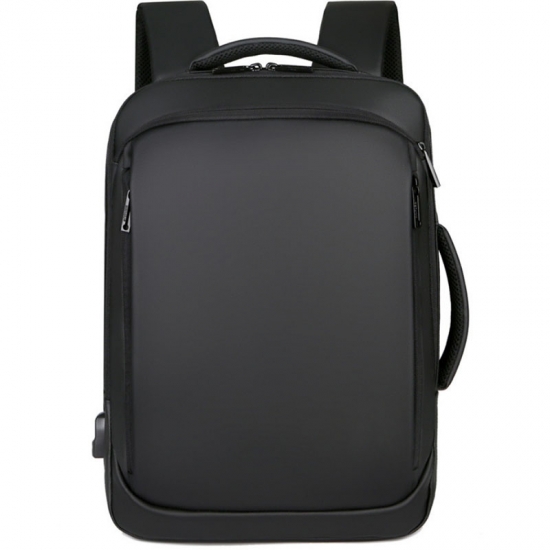
Explore business laptop backpack products for an example of a product with customized colors and logos and OEM/ODM manufacturing options.
Sports and Outdoor Bags
Sports and outdoor bags may require specialized materials, functional compartments, adjustable straps, and construction suitable for particular activities. Buyers should communicate the intended use environment clearly so that the manufacturer can recommend appropriate materials and construction methods.
Depending on the project, brands can explore outdoor backpacks and sports bag products as references for product development.
Waterproof and Airtight Bags
Waterproof and airtight bags require particular attention to material selection, sealing methods, and product construction. For these products, customization should consider not only appearance but also the performance requirements of the intended application.
Brands developing products for kayaking, camping, cycling, and other outdoor activities can explore waterproof and airtight bag solutions and discuss the required material and construction specifications with the manufacturer.
What Should You Confirm Before Starting an OEM or ODM Bag Project?
Regardless of the manufacturing model, clear communication at the beginning of a project can reduce unnecessary revisions and help both parties manage production expectations.
Product Design and Specifications
For OEM projects, prepare technical drawings, reference samples, dimensions, material requirements, and functional details whenever possible. For ODM projects, identify the existing product you want to modify and list the changes clearly.
Materials and Customization Details
Confirm the main fabric, lining, zippers, buckles, webbing, logo application, and packaging. If the bag has specific waterproof, load-bearing, or durability requirements, communicate the expected performance and testing criteria before sampling.
MOQ, Sample Cost, and Production Lead Time
Ask the manufacturer to provide the minimum order quantity, sample development cost, sample lead time, bulk production schedule, and quotation based on your actual requirements. Do not assume that ODM always means a lower MOQ or that OEM necessarily requires a large order.
Quality Control and Design Ownership
Before bulk production, approve a reference sample and confirm the inspection requirements. For OEM projects, clarify ownership of custom patterns, molds, artwork, and technical files. For ODM projects, ask whether the base design is exclusive and which modifications can be protected or reserved for your brand.
How Allbagslife Supports OEM and ODM Bag Development
Quanzhou Hairun Bags Co., Ltd. is a bag manufacturer based in Quanzhou, Fujian, China, providing bag design, manufacturing, and export services. The company works with different bag categories, including sports bags, outdoor bags, school bags, business bags, travel bags, and promotional bags.
With an in-house design team and product development capabilities, Allbagslife supports buyers who need to evaluate existing product options or develop bags according to their project requirements.
Whether you are planning a new product collection or sourcing bags for an established brand, the development process can begin with a discussion of the following details:
- Bag category and intended application.
- Reference images, existing samples, or technical drawings.
- Preferred materials, colors, dimensions, and functional features.
- Logo, label, and packaging requirements.
- Target order quantity and expected delivery schedule.
Providing these details helps the manufacturer assess the project and recommend an appropriate development approach. Sample evaluation and specification confirmation can then take place before bulk production.
Learn more about Quanzhou Hairun Bags and its manufacturing capabilities, or contact the team to discuss your next bag project.
Frequently Asked Questions About OEM and ODM Bags
What is the difference between OEM and ODM bags?
OEM bags are manufactured according to the buyer's own designs or specifications, while ODM bags are developed from designs provided by the manufacturer and customized according to the buyer's requirements. OEM generally offers more design control, whereas ODM can reduce initial design work.
Is OEM or ODM better for a new bag brand?
ODM is often a practical starting point for a new brand that wants to select an existing bag design and customize its branding, materials, or colors. OEM may be more suitable if the startup already has a distinctive product design and the resources to develop it.
Can I customize the logo on ODM bags?
Yes. Many ODM bag projects allow buyers to customize logos through printing, embroidery, woven labels, or other available methods. The available options depend on the product design and manufacturer's capabilities.
Does OEM bag manufacturing require a higher MOQ?
Not necessarily. MOQ depends on the bag style, materials, production process, custom components, and order quantity. OEM projects involving special hardware or new tooling may require higher quantities, but buyers should request a project-specific quotation.
How long does OEM or ODM bag production take?
ODM projects may require less development time when an existing design needs only minor modifications. OEM projects may take longer because of new pattern development and sample revisions. Actual sampling and bulk production schedules should be confirmed with the manufacturer after reviewing the product specifications.
Can one manufacturer provide both OEM and ODM services?
Yes. Some bag manufacturers provide both OEM and ODM services. This allows brands to choose different development approaches for different products while working with the same manufacturing partner. Buyers should confirm the factory's design, sampling, and production capabilities before placing an order.
Who owns the design of an OEM or ODM bag?
Design ownership depends on the original design source and the agreement between the buyer and manufacturer. OEM buyers should clarify ownership of their submitted designs and custom development files. ODM buyers should confirm the manufacturer's rights to the base design and the buyer's rights to logos and commissioned modifications in a written agreement.
Conclusion
Choosing between OEM and ODM bag manufacturing is ultimately about matching your product development needs with the right production approach. OEM provides greater control when you have a clear design and specific requirements, while ODM offers a practical route when you want to build on existing product designs.
Before making a decision, consider your target market, customization requirements, budget, order quantity, and launch schedule. A clear discussion with an experienced bag manufacturer can help turn your product idea into a workable development and production plan.
If you are looking for an OEM or ODM bag manufacturing partner, contact Allbagslife to discuss your product requirements and explore suitable bag solutions.

