 Tel : +86 595 87817505
 Mobile Phone : +86 13799577570
 Email : robin@hiway-bags.com





A business trip can involve airport transfers, client meetings, hotel stays, and long working days away from the office. For professionals who carry laptops, documents, chargers, and personal belongings, a backpack needs to do more than provide basic storage. It should keep work essentials organized, protect electronic devices, and remain comfortable throughout the journey.
So, what features should a high-quality business travel backpack have? The most important features include a padded laptop compartment, organized storage, durable materials, comfortable shoulder straps, reliable zippers, and practical travel details. Depending on the target market, water-resistant fabrics, anti-theft pockets, and luggage straps can also add value.
Quick Answer: Essential Features of a High-Quality Business Travel Backpack
A high-quality business travel backpack should combine laptop protection, functional compartments, durable construction, ergonomic carrying comfort, and convenient travel access. For brands and wholesalers, the right product should also offer suitable material choices, customizable details, and consistent manufacturing quality.

Dedicated Laptop Protection for Business Travelers
A laptop is often one of the most valuable items a business traveler carries. Whether it is used for presentations, emails, project management, or client communication, protecting it during transportation is essential.
A high-quality business travel backpack should have a dedicated laptop compartment with sufficient cushioning. This compartment should keep the device separated from other belongings and reduce the impact of everyday movement.
When evaluating laptop protection, consider the following features:
- Padded laptop compartment: Cushioning on the sides and bottom helps reduce the risk of impact damage.
- Suitable laptop capacity: The compartment should fit the intended device size, such as 13-inch, 14-inch, 15.6-inch, or 17-inch laptops.
- Secure internal structure: Elastic straps or retaining panels can help prevent devices from shifting.
- Convenient access: A separate laptop opening makes it easier to retrieve a computer during airport security checks and business meetings.
For backpack manufacturers, laptop compartment dimensions should be confirmed during sample development. The internal measurements should be tested against the actual laptop sizes the product is designed to accommodate.
Brands looking for different laptop storage designs can explore the laptop backpack collection at Allbagslife.
Smart Storage and Functional Compartment Design
Business travelers usually carry more than a laptop. Documents, notebooks, smartphones, charging cables, power adapters, passports, and personal accessories all need suitable storage space.
A well-organized business travel backpack makes it easier to find essential items without emptying the entire main compartment.
Separate Compartments for Work Essentials
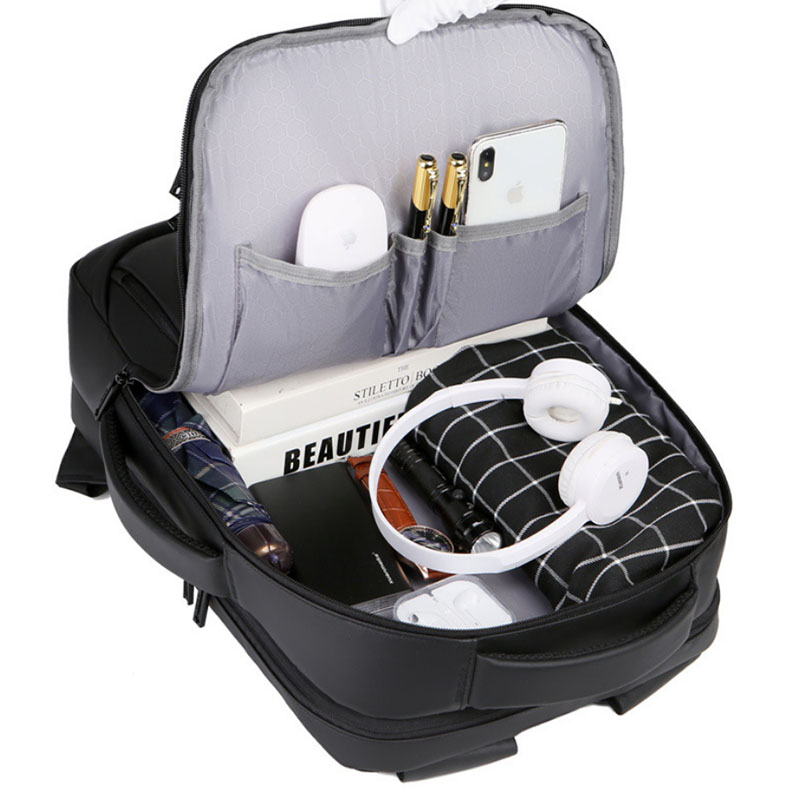
A practical compartment layout may include:
- A main compartment for clothing, notebooks, and larger belongings.
- A padded laptop section for computers and tablets.
- Small organizer pockets for pens, charging cables, and business cards.
- A front-access pocket for frequently used travel essentials.
- Side pockets for water bottles and compact accessories.
The ideal layout depends on the intended use. A backpack designed primarily for office commuting may require more space for electronic accessories and documents, while a model for overnight business trips may need additional room for clothing and personal items.
Easy Access Without Unnecessary Complexity
More compartments do not always mean better functionality. Too many small pockets can reduce usable storage space and make the backpack difficult to organize.
Manufacturers should consider pocket dimensions, opening directions, placement, and accessibility during product development. Each compartment should serve a clear purpose rather than simply increasing the number of features.
Durable Materials for Frequent Travel
A business travel backpack may be used almost every day. It is exposed to friction, repeated loading, transportation handling, and changing weather conditions. Material selection therefore plays an important role in product durability and overall performance.
Polyester, Nylon, and Oxford Fabric
Different fabrics offer different advantages for business backpack manufacturing.
- Polyester: A versatile material commonly used for everyday business backpacks. It offers various fabric weights, textures, and surface finishes.
- Nylon: Often selected for lightweight backpack designs because of its abrasion-resistant characteristics and flexibility.
- Oxford fabric: A practical option for backpacks requiring a structured appearance and durable outer construction.
- PU-coated fabric: Can improve resistance to moisture and surface wear, depending on the coating and fabric specifications.
The best material depends on the intended application, target selling price, product structure, and expected performance requirements. A business backpack designed for frequent air travel may have different material priorities from one intended for daily office commuting.
Water-resistant fabric can help protect belongings from light rain and accidental splashes. However, water resistance should not be confused with complete waterproof protection, which also depends on zippers, seams, closures, and construction methods.
Reliable Stitching and Hardware
Fabric quality alone cannot determine how long a backpack will last. Stitching, zipper performance, handles, and reinforced stress points are equally important.
During product evaluation, buyers should pay particular attention to shoulder strap attachment points, zipper ends, handles, and bottom panels. These areas experience repeated stress during daily use.
For bulk production, construction details should be included in the approved product specifications. Consistency between the approved sample and finished products is essential for maintaining quality.
Comfortable Shoulder Straps and Breathable Back Panels
Business travelers may carry a backpack for extended periods while walking through airports, commuting between offices, or moving between meeting locations. A comfortable carrying system can make a significant difference.
Several design features contribute to carrying comfort:
- Padded shoulder straps: Help distribute weight and reduce pressure on the shoulders.
- Adjustable straps: Allow users to adapt the backpack to different body shapes and carrying preferences.
- Breathable back panels: Mesh fabric and suitable padding can improve airflow and reduce direct contact with the back.
- Reinforced top handles: Provide an alternative carrying option when the backpack needs to be lifted or placed in overhead storage.
Manufacturers should test samples with realistic loads rather than evaluating comfort only when the backpack is empty. A design that feels comfortable without a laptop and accessories may perform differently when fully loaded.
Travel-Friendly Features for Airports and Daily Commuting
A business travel backpack should support the entire travel routine, from leaving home to arriving at a hotel or client office. Small functional details can improve convenience during these transitions.
Luggage Sleeve for Easier Transportation
A luggage sleeve, also called a trolley strap, allows a backpack to slide over the handle of a rolling suitcase. This feature helps travelers carry their belongings together and reduces the need to hold multiple bags.
For products positioned toward frequent flyers, a luggage sleeve can be a useful design addition.
Quick-Access Pockets
External pockets allow travelers to retrieve frequently used items such as passports, boarding passes, phones, and charging accessories without opening the main compartment.
The position and closure of these pockets should balance convenience with security. Items that are particularly valuable should have more secure storage options.
Lightweight and Practical Structure
A larger backpack does not automatically provide a better travel experience. Excessive padding, heavy hardware, and unnecessary structural components can increase the overall weight.
Product designers should balance storage capacity, dimensions, fabric weight, and carrying comfort. The goal is to provide enough room for essential belongings without making the backpack unnecessarily bulky.
Anti-Theft Features for Better Travel Security
Business travelers frequently carry laptops, smartphones, passports, and other valuable belongings in public environments. Additional security features can help reduce exposure to common travel risks.
Depending on the product positioning, useful design options include:
- Hidden pockets positioned against the wearer's back.
- Concealed zipper openings that are less accessible to others.
- Lockable zipper pullers where suitable for the design.
- RFID-blocking pockets for selected travel documents and cards.
- Durable closures and secure zipper construction.
Not every business backpack needs all these features. A minimalist executive backpack may prioritize discreet storage, while a travel-oriented model may benefit from additional security compartments.
For brands developing products in this direction, the anti-theft bag collection provides additional product design references.
Professional Appearance and Customizable Design
A business travel backpack should look appropriate in different professional environments. A clean silhouette, balanced proportions, and carefully selected materials can make the product suitable for office use, business meetings, and air travel.
Black, grey, navy, and other neutral colors are common choices for business-oriented backpack collections. However, the right color palette ultimately depends on the target market and brand positioning.
For private-label brands, product appearance also provides opportunities for differentiation through:
- Customized fabric colors and material combinations.
- Printed or embroidered brand logos.
- Customized zipper pullers and hardware.
- Different pocket configurations and internal layouts.
- Personalized labels, packaging, and other branding details.
These design choices can help brands develop a consistent product identity while meeting the practical needs of business travelers.
What Brands Should Consider When Sourcing Business Travel Backpacks
For importers, wholesalers, and private-label brands, selecting a business travel backpack involves more than comparing appearance and price. Buyers should evaluate product specifications, manufacturing capabilities, customization options, and quality control before placing a bulk order.
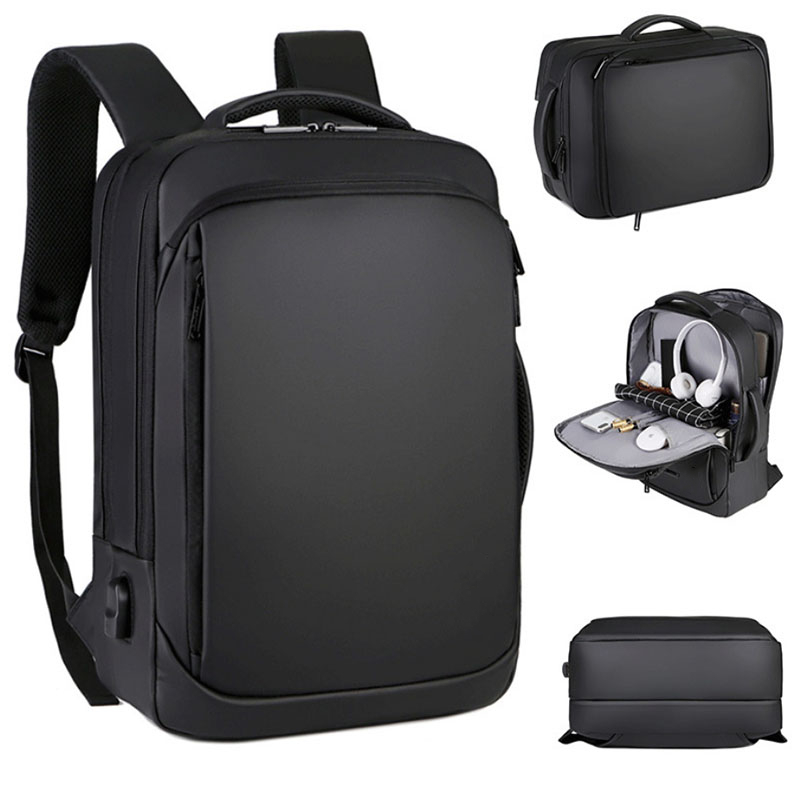
Hairun Bags is a bag manufacturer in China, providing bag design and manufacturing services for international buyers. Its business backpack collection covers different materials, structures, and functional designs to meet various market requirements.
One example is the Large Capacity Traveling Durable Business Laptop Backpack, model HY-400101.
According to its listed product specifications, this backpack features:
- Main material: 600D/PVC/Polyester.
- Lining: 210D/PU.
- Dimensions: 29W × 45.5H × 18D cm.
- Color: Customized.
- Logo: Customized.
- Application: Travel, business, and study.
- MOQ: 500 pieces.
- Sample time: 7–15 days.
- Listed production time: 35–50 days.
These specifications provide a practical reference for buyers evaluating a business laptop backpack for their product range. Actual customization requirements, costs, and production arrangements should be confirmed with the supplier before ordering.
Confirm Product Specifications Before Sampling
Before requesting a sample, buyers should define the intended laptop size, backpack dimensions, fabric requirements, lining, padding, zipper type, and pocket configuration.
Clear specifications help manufacturers understand the project and reduce unnecessary revisions during product development.
Evaluate Customization and OEM/ODM Capabilities
For private-label projects, customization may involve more than adding a logo. Buyers may need changes to the exterior design, fabric, colors, internal structure, hardware, labels, and packaging.
Discussing these requirements with the manufacturer at an early stage helps determine which changes are practical and how they may affect MOQ, sample development, and production costs.
Review Quality Control and Production Arrangements
Before mass production, buyers should approve the final sample and confirm the quality requirements for materials, stitching, dimensions, zippers, logo placement, and packaging.
It is also important to clarify sample lead time, production lead time, inspection procedures, and shipment arrangements. These details help both parties maintain consistent expectations throughout the order process.
How to Choose the Right Business Travel Backpack
The ideal business travel backpack depends on the user's travel habits, device requirements, storage needs, and preferred carrying style. A product designed for daily commuting may require a different feature combination from one intended for frequent overnight trips.
Before selecting a backpack, buyers can use the following checklist:
- Does the laptop compartment fit the intended device size?
- Is there sufficient padding to protect electronic equipment?
- Are work documents and personal belongings easy to organize?
- Are the fabric and lining suitable for the intended application?
- Are the shoulder straps comfortable under a realistic load?
- Does the backpack provide convenient access to travel essentials?
- Are the zippers, handles, stitching, and stress points well constructed?
- Can the manufacturer meet the required customization and production specifications?
A high-quality business travel backpack is ultimately a balance of protection, organization, durability, comfort, and professional appearance. For brands and wholesalers, choosing the right manufacturing partner is equally important for turning these requirements into a reliable product.
Allbagslife supports business buyers looking for different bag designs and customized manufacturing solutions. Whether you are developing a new business backpack collection or sourcing an existing product for bulk orders, discussing your requirements with the manufacturer is a practical starting point.
Frequently Asked Questions About Business Travel Backpacks
What are the most important features of a business travel backpack?
The most important features include a padded laptop compartment, organized storage, durable materials, comfortable shoulder straps, reliable zippers, and convenient travel details such as a luggage sleeve. Water-resistant fabrics and anti-theft pockets can provide additional practical value.
What size laptop should a business travel backpack accommodate?
The suitable laptop size depends on the target user. Many business backpack designs accommodate 13-inch to 15.6-inch laptops, while some larger models support 17-inch devices. Buyers should confirm the actual internal compartment dimensions before purchasing.
Which material is best for a business travel backpack?
Polyester, nylon, and Oxford fabric are common choices. Polyester offers versatile design options, nylon is valued for its lightweight and abrasion-resistant characteristics, and Oxford fabric is often selected for its durable structure. The best option depends on the intended application, performance requirements, and target price.
Should a business travel backpack be waterproof?
Water resistance is a useful feature for business travelers because it helps protect belongings from light rain and accidental splashes. However, water-resistant fabric does not necessarily make the entire backpack waterproof. Zippers, seams, and closures also affect overall water protection.
What is the difference between a business backpack and a regular travel backpack?
A business backpack generally emphasizes laptop protection, document organization, professional styling, and convenient access to work essentials. A regular travel backpack may prioritize larger packing capacity, clothing storage, and outdoor versatility.
Can business travel backpacks be customized for private-label brands?
Yes. Depending on the manufacturer's capabilities and selected model, customization may include fabric, dimensions, colors, logo placement, labels, hardware, internal compartments, and packaging. Buyers should confirm available options, MOQ, and sampling requirements before production.
What should buyers check before placing a bulk order?
Buyers should review the approved sample, fabric specifications, dimensions, stitching, zipper performance, logo details, packaging, MOQ, production lead time, and quality inspection requirements. Confirming these details before mass production helps ensure that delivered products meet the agreed specifications.

